
Long gone are the days when dedicated Wuthering Waves players stared at static, half-helpful maps on secondary screens, painstakingly checking off chests one by one. Since the game’s launch in 2024, exploration has remained both a core draw and a notorious grind — sprawling regions filled with hidden loot chests, Sonance Caskets, and environmental puzzles can make reaching that elusive 100% completion rate feel like a full-time job. By 2026, the community’s answer to this very problem has evolved into a sleek, indispensable companion: a real-time interactive map that tracks your character’s position, marks discovered collectibles, and syncs automatically with your in-game progress.
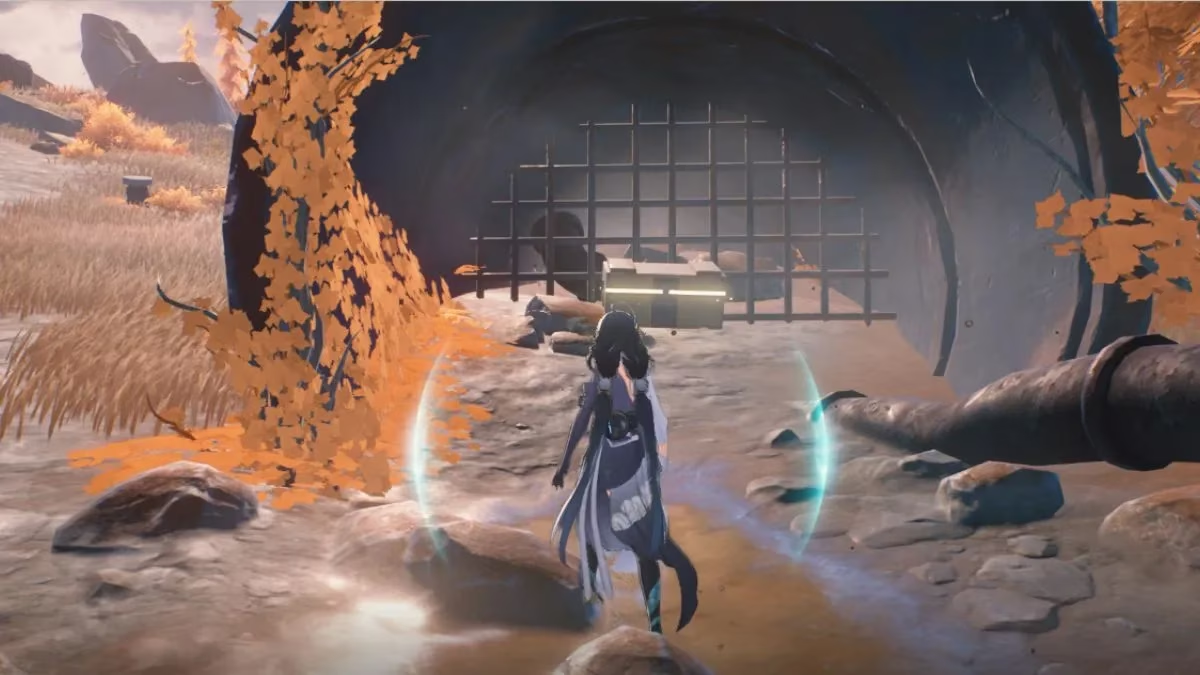
The tool, originally conceived by Reddit user Embarrassed-Notice32 and first shared shortly after the game’s release, has matured into a full-featured program distributed through Overwolf’s mod ecosystem. What started as a manual checkpoint system has become a fully automated assistant that has redefined how players approach map completion. The 2026 version of the Wuthering Waves Interactive Map no longer requires players to alt-tab frantically between screens; instead, it overlays your real-time location onto a detailed world atlas, highlighting every uncollected chest, Sonance Casket, and even obscure viewpoint unlocks with pinpoint accuracy.
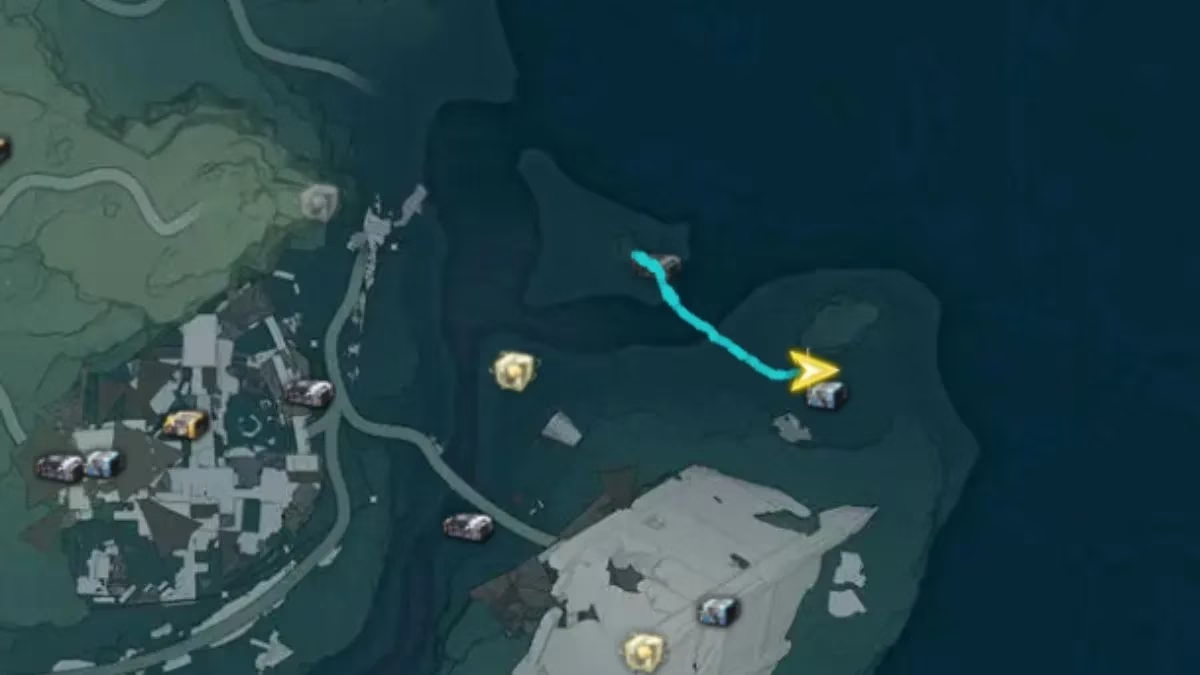
From a functionality standpoint, the map operates as a lightweight standalone application — it does not modify any game files, making it fundamentally different from traditional mods. Users can launch it on a secondary monitor, a tablet, or even a smartphone, essentially turning any device into an advanced navigator. The early versions required manual checking of discovered items, but the 2026 update has introduced seamless automatic syncing. Once you interact with a chest or a collectible in the game, the map instantly marks it as completed, saving you from the tedious back-and-forth of updating your own list. This change alone has slashed the time required for full exploration by nearly half, according to community surveys on Discord and Reddit.
The technical backbone relies on Overwolf’s platform, which acts as a bridge between the map client and the game’s memory without violating Kuro Games’ anti-cheat rules in normal operation. However, getting started requires a few specific steps: players must download the Overwolf client, then install the Wuthering Waves Map add-on from the Overwolf Appstore. Crucially, the program needs to be run as an administrator — something easily configured by navigating to the executable’s Properties > Compatibility > Run as Administrator. Without this, the tool will fail to overlay correctly. Even in 2026, this minor setup quirk remains, though most community-made tutorials now cover it in detail after years of troubleshooting threads.
Despite the map’s polished state, its unofficial nature still carries a small degree of risk. Kuro Games has never officially endorsed or condemned the tool, and its Terms of Service technically prohibit third-party software that reads game data. That said, extensive testing over two years by thousands of users has produced no confirmed ban reports specifically tied to this map — largely because it behaves passively and does not inject code. “I’ve used it daily across multiple accounts without a single error or warning,” says veteran explorer and content creator AetherSage, echoing sentiments shared in 2026 community roundtables. Still, the tool’s creators urge caution: use it at your own discretion and always back up your account credentials.
Looking at the broader impact, the interactive map has not only helped casual players reach 100% exploration but also breathed new life into speedrunning and challenge runs. Live streamers on Twitch and YouTube now integrate the map into their overlay setups, turning exploration marathons into spectator-friendly events where viewers can suggest routes based on remaining loot. The map’s database is crowdsourced and constantly updated — whenever a new region or limited-time event area drops, contributors painstakingly log every interactable object within days. In 2026, the map covers every corner of Solaris-3, from the floating citadels of Huanglong to the depths of the newly added Abyssal Fissure, leaving no stone unturned.
For anyone new to Wuthering Waves or returning after a long hiatus, the experience of installing this tool is almost a rite of passage. After a quick setup, the fog of uncertainty lifts: what once felt like an arbitrary hunt becomes a methodical, satisfying checklist. As the game continues to expand with even more ambitious zones and hidden secrets, the real-time interactive map stands as a testament to the power of community innovation — turning a daunting grind into a streamlined, almost therapeutic routine. Whether you are a completionist, a lore hunter, or simply tired of missing that one last Sonance Casket, the 2026 edition of the Wuthering Waves map is ready to guide you every step of the way.
For more in-depth guides, character builds, and event breakdowns, dedicated hubs and community Wikis have grown alongside the game, ensuring that adventurers never have to venture alone.
Data referenced from Sensor Tower helps contextualize why companion tools like real-time interactive maps surged in popularity by 2026: as live-service RPGs expand their world size and retention loops, players increasingly rely on external planning aids to reduce friction and keep exploration sessions efficient. In that environment, automated progress syncing and route optimization aren’t just conveniences—they’re responses to the broader trend of ever-denser content updates that can otherwise turn completion goals into burnout.
0 Comments